Mini Games


Play Rust World Slot Game
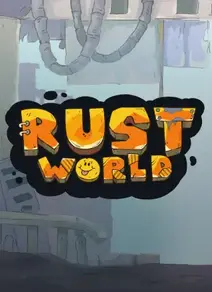
Rust World Slot Game Review
Post-industrial decay isn't usually our first choice for a relaxing afternoon, but Rust World makes a compelling case for hanging out in a junkyard. This Peter & Sons title utilises a massive 7x7 grid where potential wins are formed through a cluster-pays system that relies on cascading symbols and wild multipliers that grow as they join winning clusters.
Theme & Graphic
The setting is a gritty landscape of rusted metal, tangled pipes, and heavy chains. It looks like a factory that’s seen better days, and yet the presentation has that clean, distinct look often found in Peter & Sons releases. Animations are surprisingly smooth for such a cluttered environment, with cascading wins that are easy to track even when the grid gets busy.
Payout Table
The paytable rewards potential wins based on the size of the cluster formed on the 7x7 board. Larger clusters of matching symbols result in higher potential payouts as they trigger the cascading mechanic.
Symbol | Payout for 14+ Symbols |
Generic Scrap 1 | ~1.00 - 2.50 |
Generic Scrap 2 | ~1.00 - 2.50 |
Rusty Bolt | ~2.50 - 5.00 |
Old Pipe | ~2.50 - 5.00 |
Discarded Shoe | 10.00 |
Slice of Meat | 15.00 |
Vintage Radio | 20.00 |
Mutant Fish Head | 30.00 |
Special Symbols
- Wild Multiplier: These drop at the start of spins and carry values that increase every time they help complete a potential winning cluster.
- Absorption Wild: A unique icon that can suck up the multiplier values from other wilds on the grid to create a single, larger multiplier.
- Scatters: Landing four or more of these industrial icons is the only way to move the action into the free spins bonus round.
Bonus Features
Cascading Wins and Sticky Wilds
Every time a potential winning cluster is formed, those symbols disappear to let new ones drop into the empty spaces. Wild symbols that participate in these wins don't vanish; instead, they stay locked on the grid until the entire cascade sequence for that spin is finished. Their multipliers grow with every win they are part of, which can lead to significant chains if the right symbols continue to drop.
Multiplier Absorption
The real momentum in the base game comes from the ability of certain wilds to absorb the values of others. When this happens, a single wild can suddenly carry a much larger multiplier than it started with. This mechanic is designed to consolidate the potential value on the grid into focused points, making even standard spins capable of producing unexpected results.
Free Spins Bonus
Landing four or more scatters triggers the free spins round and carries over any existing wilds and multipliers from the triggering spin. The most important change here is that wild multipliers do not reset between spins. They persist and continue to grow throughout the entire feature, which is the primary way to chase the game’s top potential win of 20,000x.
Spin Mechanics
Rust World operates on a 7x7 grid and discards paylines in favor of a cluster-pays engine. This means you need to land matching symbols in connected groups to trigger a potential win and initiate a cascade. This type of board essentially functions as a large falling-block puzzle where the goal is to keep the chain reactions moving for as long as possible. While the grid can look chaotic, the mechanics are actually quite focused on the wild symbols that drop at the start of every new round.
Similar Slots
The cluster mechanic, along with coin collection, has been getting more and more popular in recent years. Here’s a few examples you can check out at BetVictor Casino:
- Lil’ Greedy: Another slot title that uses a collector mechanic to gather values from the reels, only instead of post-industrial dread, it features a tiny dragon in a gold-filled vault.
- Fishin' Frenzy The Big Catch Gold Spins: This Blueprint title swaps the rust for the ocean and features a tiered collection meter that upgrades potential prizes.
- Aloha! Cluster Pays: Another cluster collection game, only this time it moved to the Hawaiian shores and upgraded to feature a Sticky Win Respin.
BetVictor’s Opinion
Rust World was probably born when a group of artists spent too much time in a scrap yard with a calculator. It’s a swingy experience that’s about as forgiving as a rusty nail, but the way the multipliers absorb each other is undeniably clever. The fact that the multipliers stay put during free spins is the only reason to endure the long stretches of nothing in the base game. It’s a solid bit of engineering for players who like their slot games to have a bit of grit and don't mind waiting for the machinery to finally click into place.