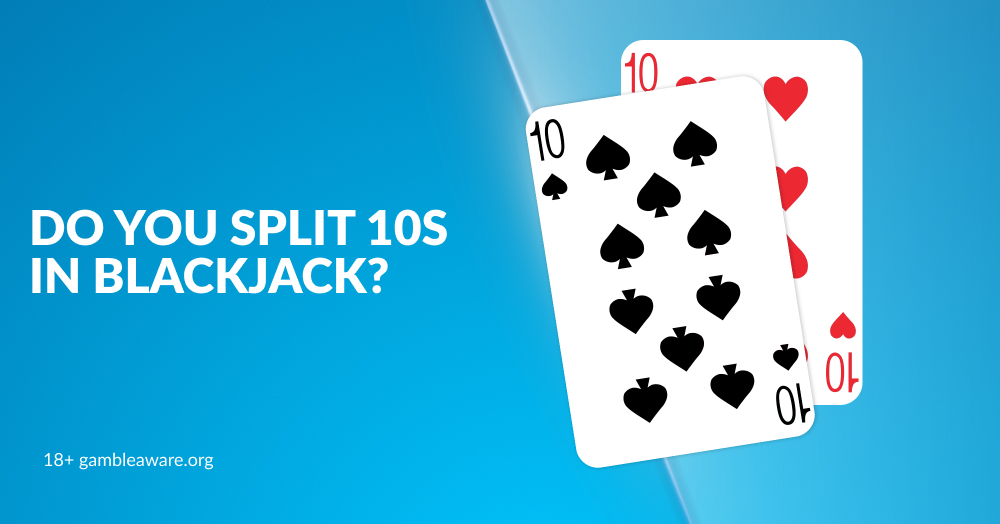
Key Overview
- Playing standard European blackjack basic strategy, you should almost never split 10s. You should stand on your total of 20 instead.
- A pair of 10s (including face cards like J, Q, K) is the second strongest hand after a natural blackjack, making such a move to break it up a losing play long-term.
- Rare exceptions exist for expert card counters.
- This advice is based on European blackjack rules (dealer no hole card, dealer stands on 17) and millions of hand simulations.
Modern computer simulations and AI-driven basic strategy charts clearly show that in European blackjack, you should almost always stand on a pair of tens rather than split them. Whether you hold 10-10, J-Q, or K-10, your total of 20 represents a powerful hand with one of the highest expected values of any non-blackjack starting hand, around +0.70 units per bet in typical 6-deck games.
Large-scale hand simulations have replaced older rule-of-thumb advice from pioneers like John Scarne and Edward Thorp’s era that sometimes recommended splitting pairs against a dealer 5 or 6. European blackjack works a bit differently than American versions: the dealer takes no hole card until players finish acting, and specific drawing rules apply. Whether you play at a land-based table or live blackjack, standing on 20 remains the smart move. When we say a hand like 10-10 has an expected value of +0.70 units, we’re not saying you’ll win 70% of the time. Instead, it means that over the long run, this hand returns an average profit of 0.70 times your stake. For example, if you’re betting £10 per hand, a +0.70 expected value means an average return of around £7 profit per hand when played correctly over many rounds.
Please remember, blackjack is a game of chance. No strategy guarantees success, and outcomes can vary in the short term. Always gamble responsibly and only stake what you can afford to lose.
What Does It Mean to Split 10s in Blackjack?
If your opening two cards are the same value, you’re allowed to split them into two hands by matching your original stake with a second bet. Choosing to split tens effectively breaks a strong total of 20 into two new hands, each starting from a value of 10, with the dealer dealing one additional card to each hand.
For strategy purposes, all ten-value cards are treated the same. That means combinations like Jack-Queen or King-10 are handled exactly like a pair of 10s. Under European blackjack rules, tables often limit resplitting tens and may not allow doubling after a split, which makes this option even less favourable in most situations.
When You Should Not Split 10s (Concrete European Examples)
You should not split tens against any dealer upcard from 2 through Ace. The best course is always to stand on your total of 20.
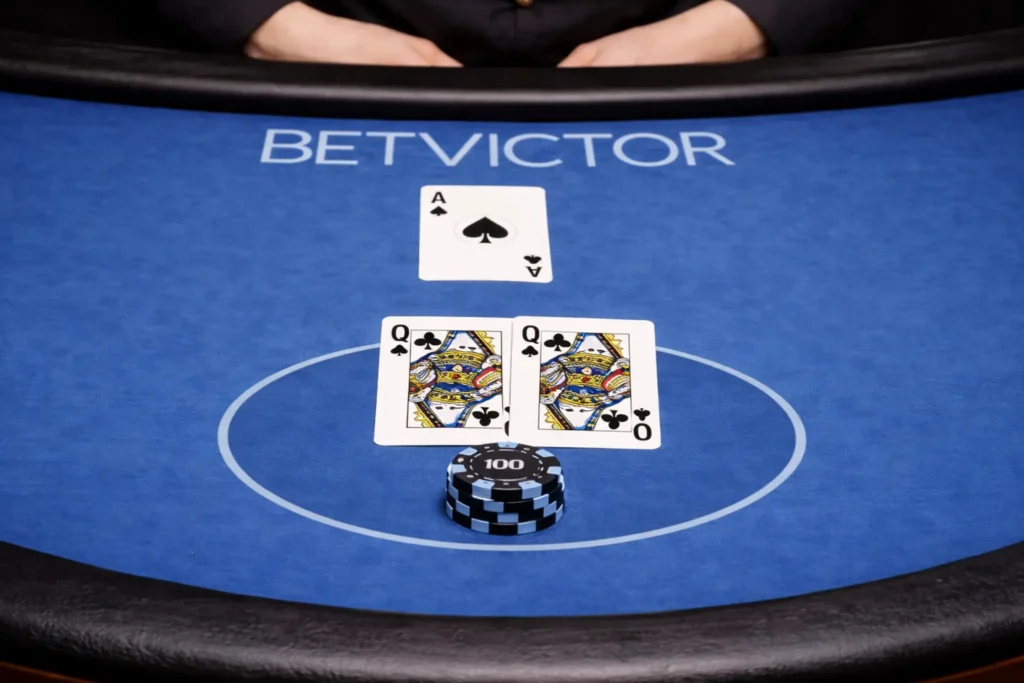
You hold J-Q (20), dealer shows 5: Basic strategy says stand. The dealer has a weak card with roughly 42% bust probability. Splitting sacrifices a dominant position against a vulnerable dealer.
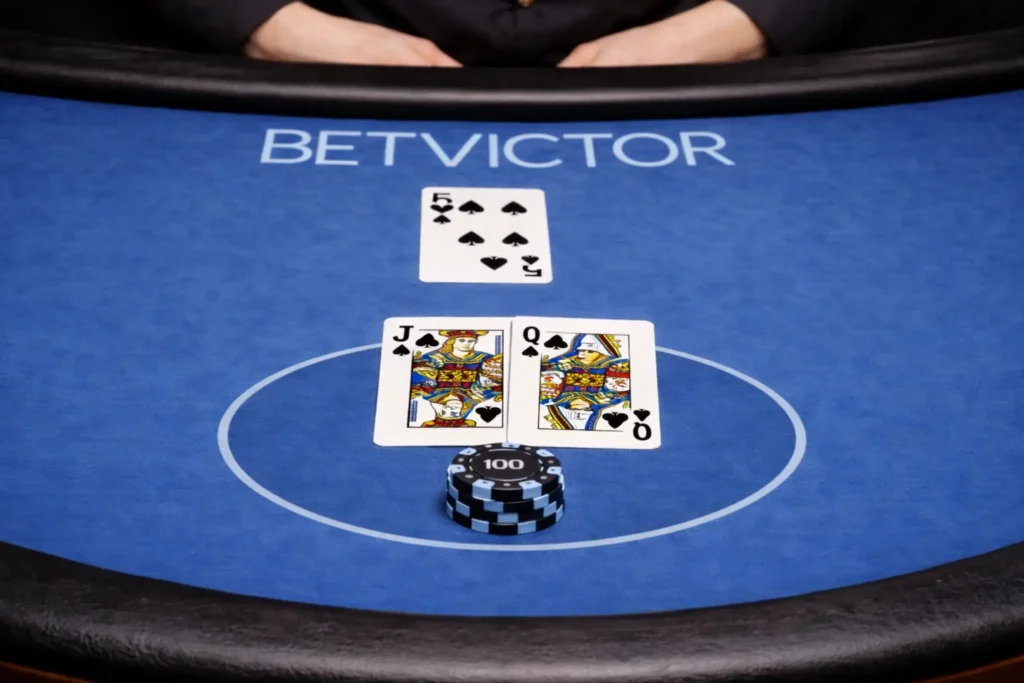
You hold Q-Q (20), dealer shows Ace: Even against this traditionally scary upcard, standing remains mathematically best. Creating two weak hands loses more money on average than keeping your strong hand intact.
You hold K-10 (20), dealer shows 6: The dealer’s weak total makes this tempting, but splitting turns one high-probability win into two chances at a reasonable chance of losing both.

At land-based and live blackjack tables, it’s common for players to feel influenced by others. It’s important to follow a consistent strategy rather than reacting to external pressure.
Very Rare Exceptions: When Splitting 10s Can Make Sense
Niche scenarios exist where expert players might deliberately break this rule, but these don’t apply to typical recreational sessions.
Card counting: When the running count is very high and the deck contains excess high cards left, skilled card counters might split tens against a dealer 5 or 6. At true counts of +4 or higher, drawing tens or aces to each hand becomes more likely.
This play increases variance and is really only used in more advanced situations. If you’re not keeping track of the count, it’s not something you’d include in your usual strategy.
Related Pair-Splitting Strategy: What to Split Instead
Understanding when to split aces and 8s helps place the 10s rule in context:
- Always split Aces and 8s regardless of dealer upcard, these escape weak starting totals
- Split 2s/3s against dealer 4-7
- Split 9s against dealer 2-6 and 8-9, but stand against 7, 10, or Ace
- Never split 4s or 5s – with 5s, double down on your total of 10 against dealer 2-9 instead
- We have a full article on when to split in blackjack
Conclusion
When it comes to playing a hand valued at 20, most established blackjack guidance points towards keeping things simple rather than making unnecessary changes. While rule variations like the European no hole card format can influence certain outcomes, they don’t typically shift how this type of hand is approached.
Blackjack should always be treated as a form of entertainment, not a way to make money. Setting limits and playing within them can help keep the experience enjoyable and under control.
Under European rules, the dealer only draws their second card after all players have finished acting. While that changes how some hands play out, it doesn’t really alter how a total of 20 is typically handled. In most cases, keeping the hand as it is remains the standard approach. As always, different table rules can slightly affect outcomes.
They are. Any card worth 10 counts the same when it comes to decision-making. So whether it’s a pair of 10s or a mix like a Jack and a Queen, the hand is treated as a total of 20. It’s the combined value that matters, not the specific cards involved.
Splitting means placing an additional stake and playing two hands instead of one, which naturally increases how much is in play on that round. That can lead to bigger swings, both up and down. It’s worth keeping your overall budget in mind and only playing within limits you’re comfortable with, especially when decisions increase your exposure.