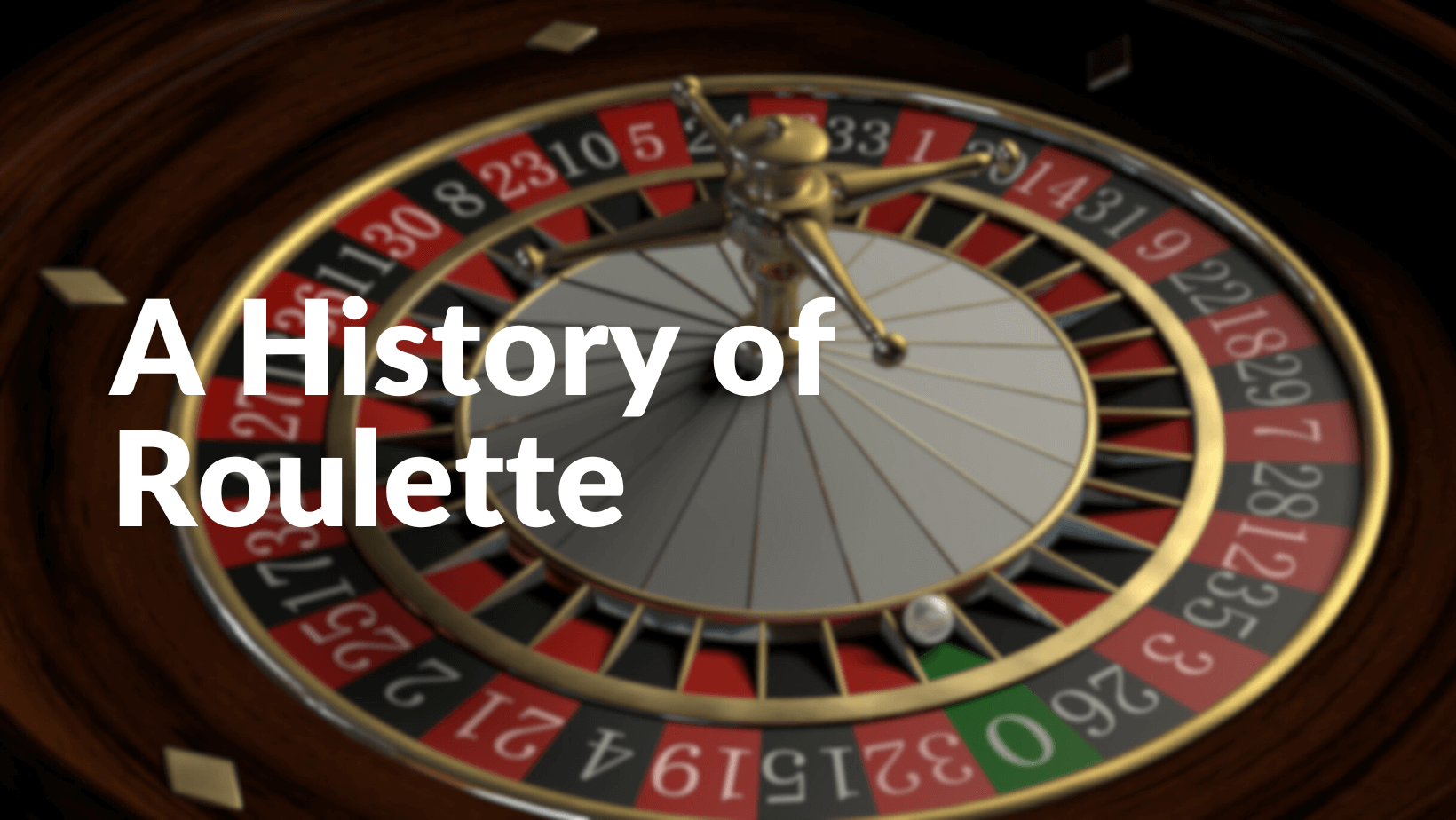
The word “roulette” itself, means ‘little wheel’ in French, and while Roulette history remains veiled in mystery, the widely accepted narrative points to its creation in the 17th century, courtesy of French mathematician Blaise Pascal. Intriguingly, Pascal was engrossed in crafting a perpetual motion machine when he inadvertently gave life to the game.
Yet, despite the French claim on the game, some people believe its origins extend further back in time. Here, we’ll take a look at what is known about the history of the roulette game as it is played today.
The predecessors of Roulette
The foundations of Roulette were laid by early games of chance, born in the 17th and 18th centuries. These games, most notably Hoca, Portique, and Biribi, all shared elements that would eventually coalesce into the Roulette we know today.
Hoca
Originating in 17th-century Italy, Hoca shared some similarities with Roulette, particularly in terms of the spinning wheel and betting on specific outcomes. In Hoca, a vertical wheel featured alternating black and white sections. Players placed bets on which section the ball would land in, akin to betting on numbers in Roulette.
Despite its resemblances, Hoca differed from Roulette in some key ways. Notably, the wheel had no numbers, and players wagered on animals or symbols instead.
Portique
Portique, another game with connections to the development of Roulette, emerged in France during the 18th century. Portique was played on a circular table with a rotating arrow or indicator. Players bet on where the arrow would come to rest, somewhat resembling the concept of betting on the outcome of a spinning wheel.
Biribi
Biribi, sometimes referred to as “lotto,” was a game popular in 18th-century Italy and France and is considered another precursor to Roulette. Biribi involved betting on one of 70 numbered squares on a gaming board, somewhat resembling the concept of betting on specific numbers in Roulette.
Who invented Roulette?
One commonly held belief is that the French mathematician and physicist Blaise Pascal played a role in the creation of Roulette. In the 17th century, Pascal was working on a perpetual motion machine, and while he never quite cracked it, he inadvertently gave birth to the roulette wheel. Pascal’s wheel was not designed as a gaming wheel; it was a byproduct of his scientific experiments, but it has been spinning almost nonstop in casinos around the world since then, so in a way, we can say he achieved his aim.
The first true mention of a roulette-like game comes from 18th-century France. The game was initially played in Parisian casinos, and it closely resembled the Roulette we know today, featuring both a spinning wheel and betting on specific numbers. It was during this time that the game gained popularity among the French nobility.
But there may be more to Roulette wheel history than that, with other countries also claiming credit:
China: The history of Roulette may have its roots in an ancient Chinese board game involving 37 animal figurines, forming a magic square whose numbers sum to 666. This enigmatic game was introduced to Europe with a few tweaks by Dominican monks who had served as missionaries. However, the details of how the original Chinese game was played remain elusive, and it’s challenging to link it definitively to modern Roulette, which includes both single and double zero slots. Nevertheless, the modern roulette wheel’s numbers indeed sum up to the cryptic number 666.
Italy: To boost morale, Roman commanders allowed their soldiers to partake in various pastimes, including gambling games. Some of these games involved spinning a shield or a chariot wheel, reminiscent of Roulette’s wheel-based mechanics.
Greece: Greek soldiers, too, engaged in gambling games during their free time. One such game bears striking similarities to modern Roulette. Soldiers would mark symbols on the inside of a shield, lay it face-down on the ground, place an arrow next to it, and then spin the shield. Bets were made on which symbol would align with the arrow.
When did it become popular?
Two clever Frenchmen, Francois and Louis Blanc, played a pivotal role in shaping Roulette as we know it today. In 1842, they made a significant change by removing the double zero pocket from the game, creating what we now call European Roulette.
However, during that time, gambling was illegal in France, so they took their modified roulette game to Bad Homburg, a resort in Germany, where it received an enthusiastic response and quickly gained popularity.
By having only one zero slot instead of two, the house advantage in Roulette decreased to 2.70% from the higher 5.26% with two zero slots. This lower house edge and better odds made single zero Roulette increasingly popular, eventually replacing the double zero version.
Some time later, Francois and Louis returned to France at the request of Prince Charles of Monaco III. They established the world’s first modern casino, featuring the famous single zero roulette game as its centrepiece. Later on, they went on to create the luxurious Monte Carlo Casino Resort.
Roulette’s ascent continued as it crossed the Atlantic to the United States with waves of early immigrants. This is also where it lost some of its exclusivity as travelling casinos toted makeshift roulette wheels to frontier towns across the Old West. Interestingly, the double-zero wheel, now known as American Roulette, was retained during this transatlantic journey.
As the 19th century gave way to the 20th, Roulette experienced a surge in popularity fuelled, in part, by its depiction in early Hollywood films, where the game’s allure and sophistication captivated audiences. It quickly became one of the most popular casino games around and remains a favourite on the Strip in Las Vegas to this day.
When the first online casino opened its virtual doors, Roulette was among its offerings, and now online games attract more players than ever before. And not just because of its accessibility. Thanks to technology, game developers are now able to produce a huge range of roulette variations and twists to the game. Players can enjoy classic RNG roulette games, Live Dealer games like Nexus Roulette and more. Providers like Evolution Gaming, with Lightning Roulette and XXXtreme Lightning Roulette, and Playtech with Quantum Roulette X1000 are creating new twists and bonus rounds to add to the casino classic.
Why was Roulette banned in France?
Roulette, originally a favourite in 18th-century France, faced a ban in its birthplace for a range of reasons. It was hugely popular among the French aristocracy, to the point where gambling addiction and financial ruin among players became a real problem. As a result, the ruler of the time, King Louis Philippe stepped in and, in 1837, issued a decree prohibiting all forms of gambling in France, including Roulette.
Although it was now prohibited in the salons and casinos of France, the game had already spread and found a welcoming home in neighbouring countries. Interestingly, during this period, the game evolved with the introduction of the single-zero wheel in Germany by François and Louis Blanc, reducing the house edge and making it more appealing to common folk.
Roulette eventually returned to France, transformed by its exile, and continued to evolve into the French roulette game we know today, solidifying its status as a timeless casino classic. This ban, while temporary, played a pivotal role in shaping the game’s global identity.
Roulette Wheel Numbers
The roulette wheel’s array of numbers, alternating between red and black pockets is instantly recognisable. Understanding the arrangement of these numbers is key to grasping the game’s mechanics and odds. The arrangement of numbers on the wheel is carefully designed to ensure a balanced distribution of odd and even numbers, as well as red and black pockets.
In both European and American Roulette, the numbers on the wheel are divided into pockets.
European roulette wheels feature 37 pockets, numbered from 0 to 36. American roulette wheels, on the other hand, have 38 pockets, including 0 and 00. This increases the house edge, affecting the odds of winning and the potential payouts.
How did Roulette travel across the pond?
Roulette’s journey to the United States was fuelled by immigrants and the allure of chance. As European immigrants flocked to the New World, they brought with them their love for the game. Mobile roulette wheels became a fixture in the Old West, offering entertainment and excitement on the frontier.
The Eagle Slot
In certain early American roulette wheels, the setup differed from the European version. These wheels featured numbers 1 to 28, along with a single zero, a double zero, and a distinctive American Eagle slot. The Eagle, symbolising American liberty, served as a house slot, giving the casino an extra edge. However, this tradition faded, and today’s American roulette wheels consist solely of numbered slots.
Modern Roulette as we know it
Modern Roulette offers a huge range of variations beyond the classic European and American versions. For a start, there’s online Roulette with all that entails, as well as fascinating versions of the game like California Roulette, and Slider Roulette.
Online Roulette
The digital age brought the excitement of the roulette table to online casinos and made it available to anyone with an internet connection. But it’s not just about convenience! Thanks to the miracles of modern technology, online Roulette has evolved, with a huge number of variations and innovative features supplementing the basic game. And producers keep coming up with more every day!
California Roulette
California Roulette is a variation that emerged to navigate the state’s restrictive gambling laws. Unlike traditional Roulette, California roulette does not use a wheel. Instead, it employs cards and a modified betting system to create a similar gaming experience that won’t fall foul of local regulations.
Slider Roulette
Slider Roulette is a version of roulette utilised by Esports sites, like for CS:GO betting exchanges and so on.