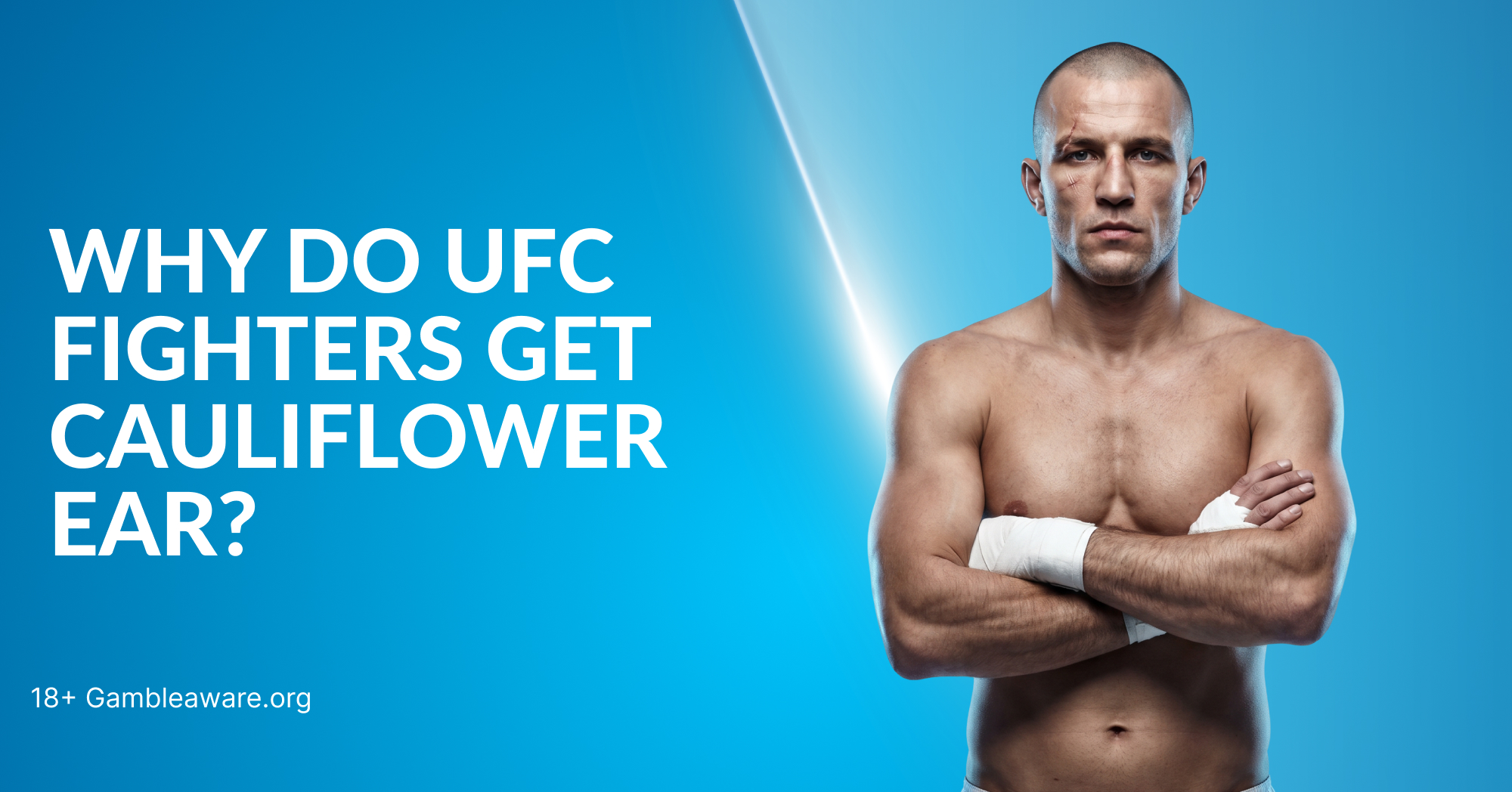
You do not need to watch much UFC before noticing that some fighters have very unusual ears.
They can look swollen, folded over or almost hardened into a completely different shape. It is especially common among wrestlers and Brazilian Jiu-Jitsu specialists, although plenty of MMA fighters from other backgrounds develop it too. That condition is known as cauliflower ear.
It develops after the outside of the ear takes enough repeated punishment for blood to collect beneath the skin. If the damage is not treated properly, the ear can heal in that thick, uneven shape permanently.
And MMA happens to be a very good sport for damaging your ears. For markets across upcoming cards, visit BetVictor’s UFC betting and odds page.

What Causes Cauliflower Ear?
The visible part of the ear is largely made from cartilage covered by a layer of tissue and skin.
If that area gets hit, rubbed or compressed hard enough, the tissue can separate from the cartilage underneath. Blood then collects in the gap, creating what doctors call an auricular haematoma.
At that stage, the ear may look puffy and swollen rather than permanently deformed. The problem comes if it stays like that.
Cartilage depends on the surrounding tissue for its blood supply. Leave the blood trapped there for too long and part of that supply can be disrupted. The ear then starts healing around the damage, with scar tissue and irregular cartilage growth eventually producing the familiar cauliflower shape.
Once that has hardened, it is not simply swelling that will disappear after a few days.
Why Do So Many UFC Fighters Have It?
Think about what happens during an ordinary week of MMA training.
A fighter can spend hours wrestling against a cage, drilling takedowns, escaping submissions and grappling on the mat. Their head is constantly pressed against shoulders, arms, hips and the floor.
Sometimes the ear gets folded underneath somebody or sometimes it gets dragged across the mat.
Sometimes an opponent’s forearm is pushing directly against it while both fighters are fighting for position. Then you add punches, elbows and other impact on top.
One of those moments might do nothing. Repeat them over several years and it is much easier to understand why the ears start changing.
Our UFC vs MMA guide looks at how wrestling, BJJ, boxing and other disciplines all come together in the sport.
Why Is Cauliflower Ear So Common Among Wrestlers?
Wrestling is probably the biggest culprit.
A good wrestler uses their head almost like another limb. It helps create pressure, control position and force an opponent backwards. Great for wrestling. Not so great for ears.
During scrambles, the ear can easily become trapped between the side of the head and another fighter’s body. Add constant friction from training sessions several times a week and the area never gets much of a break.
That is why cauliflower ear is not only associated with UFC fighters. You see it throughout amateur wrestling, collegiate wrestling, BJJ and other grappling sports.
Some people even see it as a strange badge of experience.
It tells you someone has probably spent quite a lot of time with another human being trying to squash their head into the floor.
Can Strikers Get Cauliflower Ear?
Yes. Being a wrestler certainly makes it more likely, but you do not need to shoot takedowns for a living to damage an ear.
Direct strikes can cause an auricular haematoma too. A boxer, kickboxer or Muay Thai fighter can therefore develop cauliflower ear after taking repeated impact to the side of the head.
MMA fighters are simply exposed to both problems. They get hit. Then they go wrestling.
Then they turn up for training again a day later and irritate the same area. That combination helps explain why the condition is so visible across the UFC.
Does Cauliflower Ear Hurt?
A fresh injury can hurt quite a lot.
The ear may feel tender, hot or swollen after trauma, particularly while blood is still collecting underneath the skin. Older cauliflower ear is different.
Once everything has healed and hardened, the unusual shape can remain even though the original pain has disappeared.
That is why you will see veteran fighters with badly distorted ears who clearly are not walking around in constant agony.
The appearance is often the leftover evidence of injuries that happened years earlier.
A newly swollen ear is the one that should not simply be ignored.
Can Cauliflower Ear Be Fixed?
The timing matters. If somebody has a fresh auricular haematoma, medical treatment can remove the trapped blood and help the tissue sit back against the cartilage while it heals.
The important bit there is medical treatment. Trying to stab or drain your own ear in a changing room is not a sensible substitute for seeing a healthcare professional.
Once the ear has already healed into a hard cauliflower shape, reversing it becomes much more difficult. Correcting an established deformity can require specialist surgery rather than simply dealing with some swelling.
That is why early treatment makes such a difference.
Can It Affect Hearing?
Cauliflower ear is not automatically the same thing as hearing damage. The visible deformity is on the outer ear. But severe cases can cause problems.
If the ear becomes thick enough, it can narrow the entrance to the ear canal. Untreated trauma can also become infected, which creates another set of complications.
So while plenty of fighters treat cauliflower ear as little more than an occupational souvenir, it is still an injury rather than a harmless cosmetic change.
Why Do Some Fighters Seem Proud of It?
Combat sports are weird like that. In another profession, somebody might be desperate to get their ear back to normal.
In a wrestling gym, cauliflower ear can almost look like evidence that somebody has put the hours in.
That does not mean every fighter wants it. Far from it. Plenty use protective headgear in training and get fresh swelling treated quickly. But there is definitely a culture around it.
Some fighters simply stop caring how their ears look after years of grappling. If they are going to return to wrestling again next week anyway, protecting a perfectly shaped ear may not rank especially high on their list of priorities.
Does Cauliflower Ear Mean Someone Is a Great Grappler?
No. It is tempting to see a fighter with horrible ears and immediately assume they must have elite wrestling.
Maybe they do. The ears alone do not prove it. One person can grapple for years without developing much visible damage. Another might get cauliflower ear relatively early.
How somebody trains, how their ears are shaped, whether they wear protection and how quickly fresh injuries are treated can all make a difference.
So cauliflower ear can tell you somebody has probably spent a lot of time in contact sports.
It cannot tell you whether they can double-leg Islam Makhachev.
Can UFC Fighters Prevent It?
They can reduce the risk. Protective wrestling headgear is one of the obvious options during training because it keeps some of that friction and pressure away from the ears.
Getting fresh swelling checked quickly helps too. What fighters cannot do is completely remove the thing causing the problem.
A wrestler still needs to wrestle. A BJJ fighter still needs to grapple. An MMA fighter still spends thousands of hours doing both.
That is why cauliflower ear remains so common even when everybody knows what causes it.
It is one of the more visible reminders that the punishment of MMA does not begin when the UFC cameras switch on. A lot of it happens years earlier in the gym.
For more on the physical side of preparing for a fight, our guide to why UFC fighters cut weight explains what happens before fighters even reach the scales.
Our UFC rules guide covers what is legal once they enter the Octagon. For more UFC features, previews and rankings, head to the BetVictor UFC and MMA News hub.